Key Insights
- Incense has been part of human civilisation for more than 4,000 years.
- Fragrance played a major role in one of history’s earliest international trade networks.
- Smell has a uniquely direct connection with emotion and memory.
- Aromas can influence mood, relaxation and attention through neurological pathways.
- Scent is one of the strongest triggers of autobiographical memory.
- Modern perfume evolved from the ancient practice of burning aromatic materials.
- Japanese Kōdō teaches mindfulness through deeply experiencing fragrance.
- Our favourite scents are often linked to personal memories rather than objective preference.
- Daily rituals become powerful because repetition creates emotional associations.
- Small intentional moments of calm can have a meaningful impact on wellbeing.
The Science, History and Power of Incense Explained
For thousands of years, people across the world have lit incense to mark important moments, create peaceful spaces and bring a sense of calm into their daily lives. Today, many people burn incense during meditation, yoga, journalling or simply while relaxing with a cup of tea after a busy day. Yet few realise that this simple ritual has a history stretching back over four millennia and a fascinating connection with psychology, neuroscience and human behaviour.
Incense is far more than a pleasant fragrance filling a room. It is part of one of humanity’s oldest traditions, one of the earliest global trading industries, and one of the most powerful ways we engage our sense of smell. Modern research is also helping us understand why fragrance can influence our emotions, trigger vivid memories and become such a meaningful part of our wellbeing rituals.
In this article, we explore the science, history and enduring power of incense, and why this ancient practice continues to resonate with so many people today.
Incense Is Older Than Most Major Religions
Many people naturally associate incense with religion or spirituality. While it certainly plays an important role in many religious traditions today, its origins are much older.
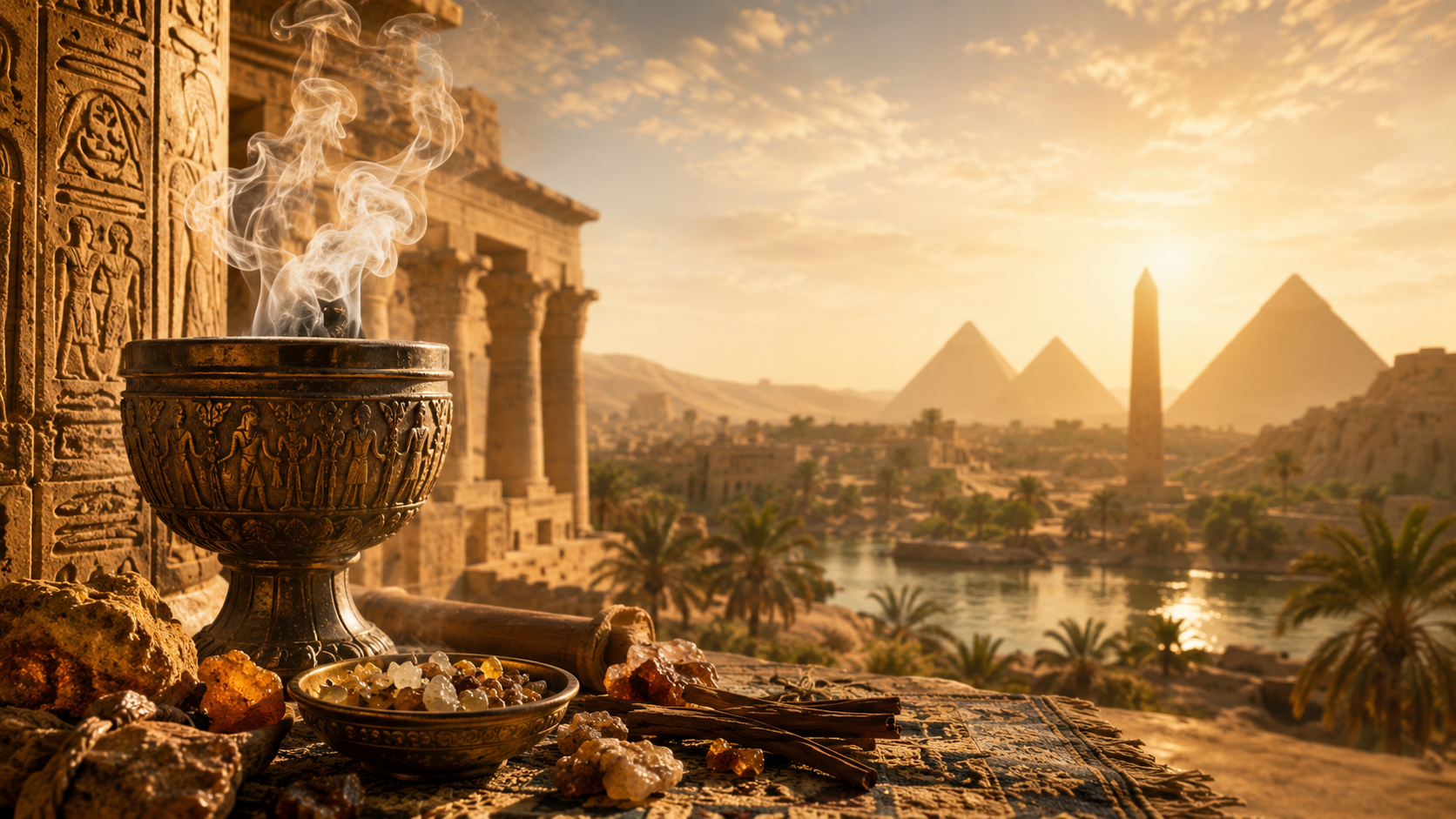
Archaeological evidence suggests that aromatic resins and woods were being burned in Ancient Egypt more than 4,000 years ago. Similar discoveries have been made in Mesopotamia and the Indus Valley, where fragrant materials formed part of daily life and ceremonial practices as early as 2000–3000 BC.
These early civilisations understood that fragrance could transform an environment. Aromatic smoke was used during important gatherings, royal ceremonies and moments of reflection. Long before modern air fresheners or perfumes existed, incense created atmosphere and meaning.
Perhaps one of the most fascinating aspects of incense is its longevity. Civilisations have risen and fallen, technologies have transformed our lives, yet the simple act of lighting incense has survived through thousands of years.
Some traditions disappear.
Sometimes the oldest rituals survive because they continue to offer something deeply human.
One of the World’s First Global Industries
When people think of ancient trade, they often picture silk, spices or precious metals. However, one of the earliest products to connect continents was incense.
Frankincense and myrrh were among the most valuable commodities in the ancient world. Merchants transported these precious resins across deserts and seas, linking Africa, Arabia, India and the Mediterranean through vast trading networks.
Entire kingdoms prospered because they controlled sections of these routes. Caravans travelled enormous distances carrying aromatic materials destined for temples, royal courts, homes and marketplaces.
Long before planes, railways or the internet connected societies, fragrance created global commerce.
This remarkable history reminds us that incense was never simply a luxury. It represented culture, identity, devotion and shared human experience.
Even today, lighting incense connects us with a tradition that spans continents and thousands of years.
Why Does Scent Feel So Powerful?
Have you ever noticed how one fragrance can instantly change the atmosphere of a room?
Scientific research suggests that our sense of smell is unique among our senses because it has direct neurological connections with areas of the brain responsible for emotion and memory.
Unlike vision or hearing, scent information reaches structures such as the amygdala and hippocampus with remarkable speed. These regions play important roles in emotional processing and long-term memory formation.
This helps explain why certain aromas can create feelings of comfort, nostalgia or relaxation almost instantly.
While incense itself should not be viewed as a treatment for stress or anxiety, fragrance can contribute to an environment that supports calm, mindfulness and emotional wellbeing.
Sometimes changing the atmosphere around us can help change the atmosphere within us.
That simple shift in environment is one reason daily rituals involving fragrance remain so popular across cultures.
Why Smell Is Our Strongest Memory Trigger
Many people have experienced the sudden flood of memories brought on by a familiar scent.
The aroma of fresh bread might remind someone of childhood.
Freshly cut grass may bring back memories of long summer holidays.
A particular perfume may instantly remind us of someone we once loved.
This powerful relationship between scent and memory is supported by neuroscience. Smell signals are processed in brain regions closely associated with emotional memory, allowing fragrances to evoke experiences before we have consciously analysed them.
In many ways, scent bypasses thought and reaches feeling first.
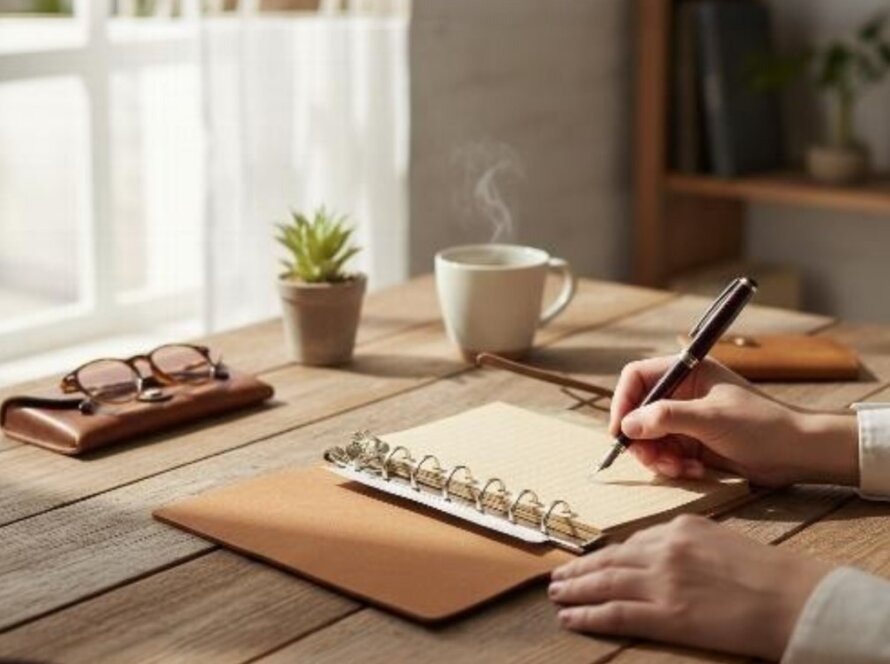
That is why lighting a familiar incense during meditation or journalling can become such a meaningful experience. Over time, the fragrance itself becomes associated with moments of stillness, self-reflection and peace.
Sometimes we are not remembering a smell.
We are remembering a moment in our lives.
The Ancient Origins of Perfume
The word perfume itself reveals just how deeply fragrance is rooted in human history.
Derived from the Latin phrase per fumum, meaning through smoke, the word reminds us that fragrance originally entered our lives by burning aromatic materials.
Long before elegant glass bottles lined department store shelves, people created beautiful scents using herbs, woods and precious resins placed over heat or flame.
Fragrant smoke drifted through temples, homes and gathering places, creating atmosphere and symbolising purification, celebration and reverence.
Many ancient societies believed aromatic smoke carried prayers or intentions upwards, while others simply appreciated the beauty and serenity it created.
Although perfume technology has evolved dramatically, our emotional relationship with fragrance remains remarkably similar.
We continue to choose scents that comfort us, energise us or help us feel good about ourselves
Listening to Incense
One of the most beautiful traditions surrounding incense comes from Japan.
Kōdō, often translated as The Way of Fragrance, developed into a refined cultural art alongside the tea ceremony and flower arranging.
Perhaps its most intriguing idea is that participants do not simply smell incense.
They listen to it.
At first this expression may seem unusual, but it reflects a profound philosophy.
Listening requires attention.
Listening asks us to become quiet.
Listening means allowing an experience to unfold without rushing to judge it.
Instead of asking whether they like a fragrance, practitioners focus on noticing subtle changes and becoming fully present with the moment.
In today’s fast-moving world, this philosophy feels increasingly relevant.
Perhaps incense offers more than fragrance.
Perhaps it offers permission to pause.
Are You Choosing a Memory Rather Than a Fragrance?
Research in psychology suggests that our fragrance preferences are shaped by far more than the aroma itself.
Our memories, emotions and past experiences all influence which scents we enjoy.
Every smell we encounter becomes linked with the circumstances in which we first experienced it.
A fragrance associated with family gatherings, holidays or peaceful moments may continue to evoke positive emotions for decades.
Conversely, scents connected with difficult experiences may never feel pleasant again.
When we choose an incense, we are often choosing more than fragrance.
We are choosing familiarity.
Comfort.
Safety.
Hope.
The scent becomes part of our personal story.
It reminds us of who we were, where we have been and sometimes who we are becoming.
This is one reason fragrance can become such a meaningful part of daily rituals.
Lighting a favourite incense is not simply filling a room with aroma.
It can be reconnecting with a feeling that the mind has quietly stored away.
Sometimes what we are really drawn to is not the scent.
It is the memory that comes with it.
Building Positive Rituals Through Fragrance
Psychologists describe associative learning as the process by which our brains link repeated experiences together.
If we consistently meditate, journal or practise mindfulness while burning the same incense, our minds begin associating that fragrance with calm and focus.
Over time, smelling that familiar scent may help signal that it is time to slow down.
This does not mean incense itself creates meditation.
Rather, it becomes part of a ritual that prepares the mind for reflection.
Small daily habits often become powerful because of consistency rather than complexity.
The repeated pairing of scent with relaxation creates an environment where the brain learns to recognise moments of stillness.
This may explain why rituals involving fragrance have endured across so many cultures for thousands of years.
A Timeless Ritual for Modern Life
In a world filled with constant notifications, busy schedules and endless distractions, the simple act of lighting incense offers something increasingly rare.
A pause.
A breath.
A moment of presence.
Whether you appreciate incense for its history, its fragrance, its symbolism or simply the atmosphere it creates, you are participating in one of humanity’s oldest surviving traditions.
Its story stretches back over four thousand years, crossing continents and cultures, connecting ancient civilisations with modern homes.
Perhaps that enduring popularity tells us something important.
Sometimes the simplest rituals are the ones that stay with us the longest.
At Soothesoul, we believe that small daily rituals can create meaningful moments of calm, reflection and healing.
And perhaps, the next time you light your favourite incense, you won’t simply notice the fragrance.
You may discover that what you’re really experiencing is history, memory and the quiet power of being fully present.