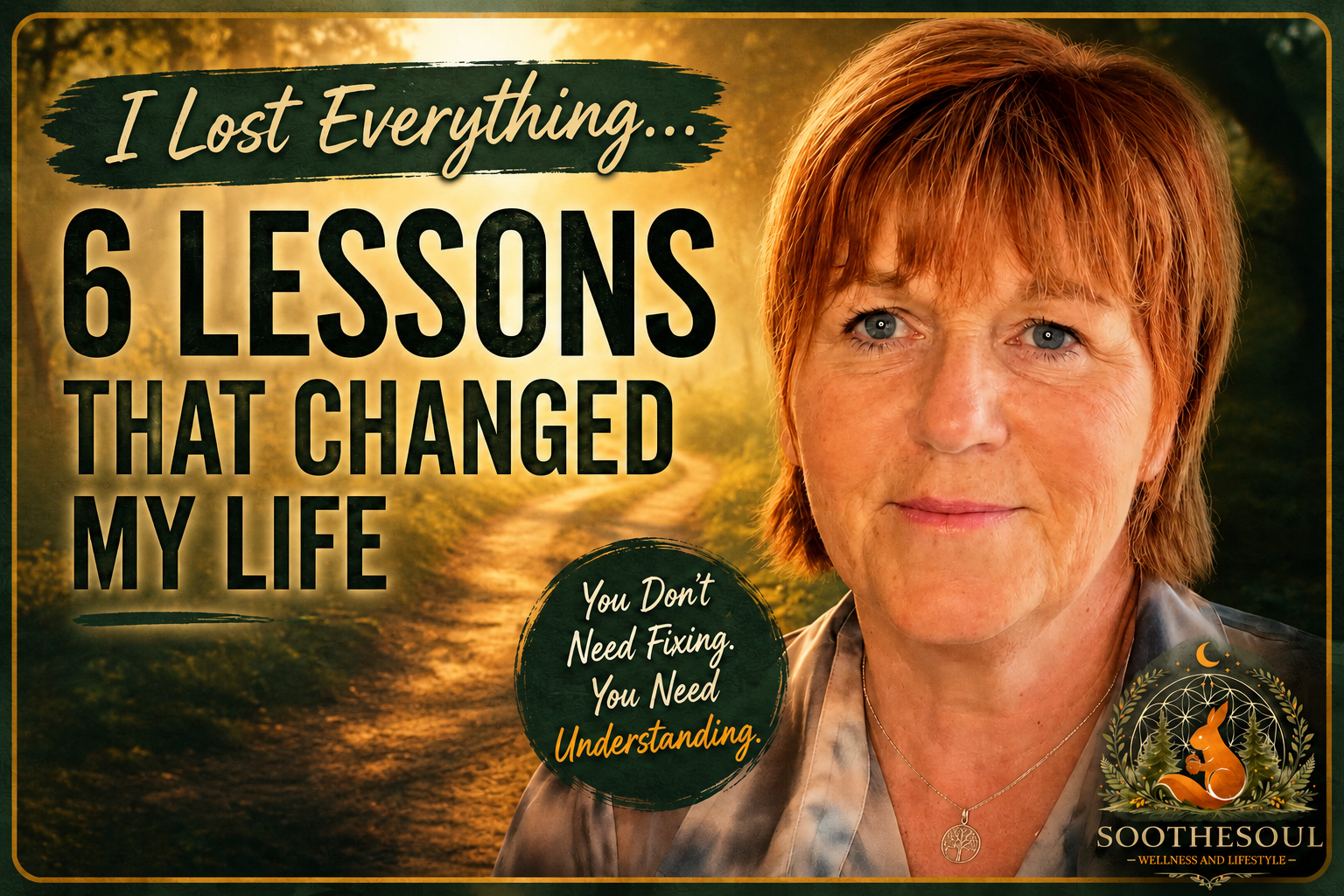
The deeper truths underneath the conversation to consider
Most healing begins when we stop trying to become someone else- Many people start healing believing they need to improve themselves. Often the real work is uncovering the person buried beneath years of expectations, fear and conditioning.
Low self-worth disguises itself as achievement- People often assume low self-worth looks like insecurity. In reality it frequently appears as over-achievement, people-pleasing, perfectionism and constant self-sacrifice.
Grief does not only expose what we have lost- It exposes what we built our identity around. When relationships, careers, roles or possessions disappear, we are forced to discover who we are without them.
Healing becomes easier when understanding replaces judgement-The moment we understand why we developed certain behaviours, self-blame begins to lose its power.
Awareness creates freedom- Patterns only control us while they remain unconscious. Once we can see them clearly, we gain the ability to choose differently.
Boundaries are acts of self-respect, not selfishness- A boundary is simply recognising that your needs matter too.
Progress is measured by awareness, not perfection- Healing is not reaching a state where difficult emotions never return. It is recognising them sooner and responding differently.
Small decisions change lives- Life-changing transformation rarely arrives through a single breakthrough. It is built through hundreds of seemingly insignificant choices made consistently.
Forgiveness is often a practical necessity- Forgiveness is not about excusing what happened. It is about refusing to carry it forever.
Happiness cannot wait for healing to finish- Healing is not preparation for life. Healing happens while life is being lived
A few years ago, I lost everything.
Or at least, that’s how it felt at the time.
I lost my health. I lost my mum to Alzheimer’s. My relationship broke down, which meant losing my partner and the family home I had lived in for twenty years. I lost two beloved dogs within six months of each other.
And somewhere amongst all of that, I lost myself.
At the time, I thought the hardest part was the grief. The heartbreak. The uncertainty.
Looking back now, I realise the most frightening part wasn’t what I lost.
It was discovering how much of my identity was attached to those things.
When they disappeared, I no longer knew who I was.
That period of my life became the beginning of a healing journey I never expected to take. It challenged everything I believed about myself, happiness, healing and personal growth.
These are six of the most important lessons I learned along the way.
Lesson 1: You Don’t Need Fixing
For much of my life, I believed I wasn’t enough.
When everything started falling apart, I spent countless hours looking back and asking myself questions.
What if I’d been stronger?
What if I’d been better?
What if I’d tried harder?
What if I’d done things differently?
Like many people, I assumed healing meant becoming a better version of myself.
What I eventually discovered was something completely different.
I didn’t need fixing.
I needed understanding.
My entire life had been shaped by a deep belief that I wasn’t worthy. I spent years trying to prove my value through being helpful, dependable and needed. I thought if I did enough, gave enough and sacrificed enough, I would finally feel good enough.
But no amount of achievement can fill a hole created by a lack of self-worth.
Healing began when I stopped trying to become somebody else and started learning who I already was.
Lesson 2: Healing Is Not Linear
One of the biggest misconceptions about healing is believing it follows a straight line.
It doesn’t.
There were days when I felt hopeful, positive and ready to move forward.
Then there were days when all the grief, fear and sadness returned as if I had made no progress at all.
For a long time, I thought those difficult days meant I was moving backwards.
I now understand the opposite is true.
Healing often happens in layers.
Every time an emotion returns, you have another opportunity to process it. The feelings may be familiar, but you are not the same person meeting them. You are stronger, wiser and more aware than you were before.
Progress is not measured by never struggling.
Progress is measured by how you respond when the struggle returns.
Lesson 3: Understanding Your Past Changes Your Future
One of the biggest breakthroughs in my healing journey came when I started learning about trauma, childhood experiences and the ways they shape our adult lives.
I began to understand that many of my behaviours weren’t conscious choices at all.
My need for validation.
My tendency to people-please.
My inability to set boundaries.
My fear of disappointing others.
All of them had roots much deeper than I realised.
What surprised me most was discovering that much of my healing wasn’t actually about the losses I had recently experienced.
It was about things I had been carrying for decades.
Understanding our patterns doesn’t excuse them.
But it does help explain them.
And once you understand a pattern, you finally have the power to change it.
Lesson 4: Real Healing Happens in Small Everyday Moments
When I first started healing, I expected huge breakthroughs.
I thought transformation would arrive in one life-changing moment.
In reality, healing happened in the smallest choices.
Choosing to rest.
Choosing to go for a walk.
Choosing to be kinder to myself.
Choosing to pause before reacting.
One of the most significant moments came when I set a boundary for the first time.
A family friend asked if I would look after his dogs.
Normally, I would have cancelled my own plans and immediately said yes.
This time I didn’t.
I politely said no.
It might sound like a small thing, but for me it was enormous.
For the first time, I chose my own needs without feeling guilty.
That single moment taught me more about self-worth than years of trying to please everybody else.
Lesson 5: Healing Is About Awareness, Not Perfection
Social media often portrays healing as a destination.
As though one day you suddenly become calm, confident, peaceful and completely healed.
That hasn’t been my experience.
I still have difficult days.
I still catch myself slipping towards old habits and patterns.
The difference is that now I notice them.
Awareness changes everything.
When you can see your patterns, you gain the ability to make different choices.
Healing isn’t about becoming perfect.
It’s about becoming conscious.
The goal isn’t to never struggle.
The goal is to understand yourself well enough to respond differently.
Lesson 6: Live While You Heal
This may be the most important lesson of all.
For a long time, I believed I would start living again once I had healed.
Once I felt stronger.
Once I felt ready.
Once I had everything figured out.
But healing doesn’t work that way.
You don’t heal and then start living.
You heal while living.
You heal when you try something new.
You heal when you make mistakes.
You heal when you take risks.
You heal when you keep showing up for life despite uncertainty.
If you put your life on hold while waiting to feel completely healed, you may end up waiting far longer than necessary to be happy.
Life itself becomes part of the healing process.
Final Thoughts
If you’re at the beginning of your healing journey, you don’t need all the answers today.
You don’t need to heal overnight.
You don’t need to become somebody else.
Take one step.
Then another.
Be patient with yourself.
Healing is not about fixing who you are.
It’s about understanding who you’ve always been beneath the fear, expectations and self-doubt.
And perhaps that’s where true freedom begins.
At Soothesoul, we believe healing isn’t about becoming more. It’s about coming home to yourself.
And no matter where you are on your journey, you are far more capable, resilient and worthy than you may realise today.