Understanding the patterns that disconnect you from yourself—and how to come back
Empowerment is often described as something you develop over time. But from a psychological perspective, it’s less about building something new and more about reclaiming what’s been conditioned out of you.
At its core, empowerment is the ability to:
- recognise your internal state
- trust your own judgement
- act in alignment with what you actually need
Most people don’t lack these abilities.
They’ve just learned — slowly and unintentionally — to override them.
How Disconnection Happens
Disconnection from self isn’t random. It’s learned behaviour. Over time, the brain adapts to patterns that feel necessary for safety, approval, or belonging.
This can look like:
- prioritising others to avoid conflict
- suppressing emotions to stay “in control”
- seeking external validation to confirm self-worth
From a neuroscience perspective, these patterns become efficient. The brain repeats what reduces discomfort. Even if those patterns come at a long-term cost. So what feels like “this is just who I am” is often conditioning, not identity.
The Role of Awareness
Real change doesn’t start with behaviour. It starts with awareness.
Specifically:
- noticing emotional responses in real time
- recognising automatic thoughts
- identifying where your actions don’t match your needs
This process is sometimes referred to as metacognition — the ability to observe your own thinking.
Without it, patterns run unconsciously.
With it, you create choice.
And choice is where empowerment begins.
Why Small Changes Matter More Than Big Ones
There’s a tendency to look for breakthrough moments. But psychologically, change is driven by repetition, not intensity.
Each time you:
- pause instead of reacting
- set a boundary instead of complying
- check in with yourself before saying yes
you are rewiring behavioural patterns. This is neuroplasticity in action. Not dramatic. But highly effective over time.
Rebuilding Self-Trust
One of the most overlooked aspects of empowerment is self-trust. When you repeatedly ignore your own needs, your brain learns:
“My signals aren’t important.”
Rebuilding that trust requires consistency. Not perfection — consistency. Following through on small internal cues:
- resting when you’re tired
- speaking up when something feels off
- allowing space instead of forcing decisions
Over time, this sends a different message: “I can rely on myself.” That shift changes behaviour at a foundational level.
You Don’t Need a Fixed System
Many approaches to personal growth rely on structure. Routines, frameworks, step-by-step systems. And while structure can be useful, it can also become another form of disconnection if it replaces internal awareness. Psychologically, flexibility is more sustainable than rigidity.
Because your needs are not static.
Empowerment comes from developing internal referencing rather than depending entirely on external guidance.
Creating Psychological Space
Empowerment often begins with something simple:
Space.
Not just physical space, but cognitive and emotional space.
Time without constant input.
Moments without immediate reaction.
Periods where you are not trying to fix, improve, or optimise yourself.
In that space, the nervous system settles. And when it settles, clarity increases. You begin to distinguish between:
- conditioned responses
- and authentic needs
The Shift That Matters
At a certain point, the process becomes less about “improving yourself” and more about relating to yourself differently.
You stop:
- outsourcing decisions
- waiting for certainty
- measuring your worth through output
And you start:
- responding instead of reacting
- choosing based on alignment, not pressure
- allowing imperfection without losing direction
This is psychological empowerment. Grounded. Stable. Self-directed.
A More Accurate Way to See It
A More Accurate Way to See It
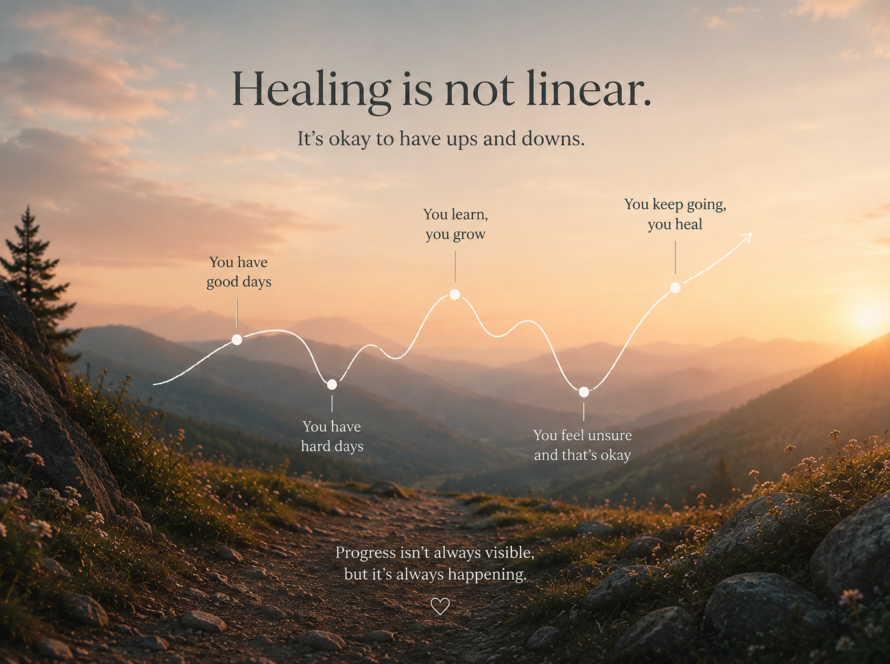
You don’t need to become more empowered. You need to remove the layers that taught you not to be. And that doesn’t happen all at once. It happens through repeated, small moments of awareness and choice.
Where Soothesoul Fits In
Where Soothesoul Fits In
At Soothesoul, the focus isn’t on giving you answers. It’s on supporting the process of reconnection. Through simple tools and practices that:
- slow things down
- bring awareness inward
- create space for reflection
Not to change who you are — but to help you access what’s already there.